Why is it needed

Art Craft

Doing art and craft with the steps and instructions guided by the teacher during each lesson will be the best way to develop your child’s creativity.

Where can I get some

Violin

ABRSM Violin examination will be having new syllabuses starting from 2012 to 2015.

What is Lorem Ipsum?

Guitar

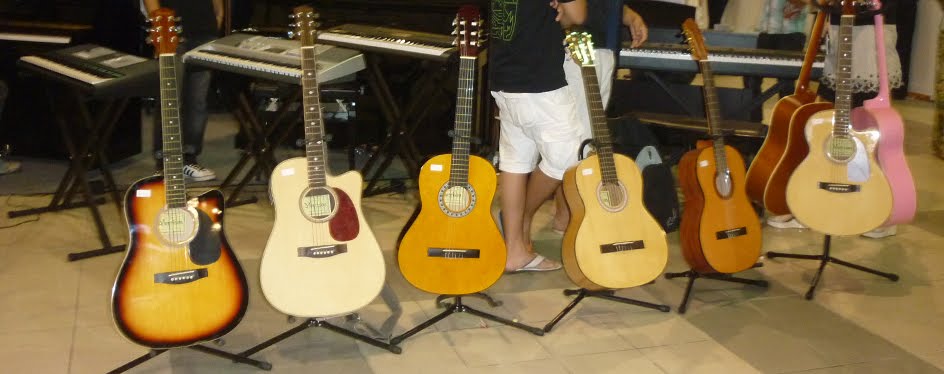
Guitar lesson is suitable for kids around 8 years old and above since their fingers will be strong enough to strum on the guitar that time.

Mauris euismod rhoncus tortor

Piano Festival

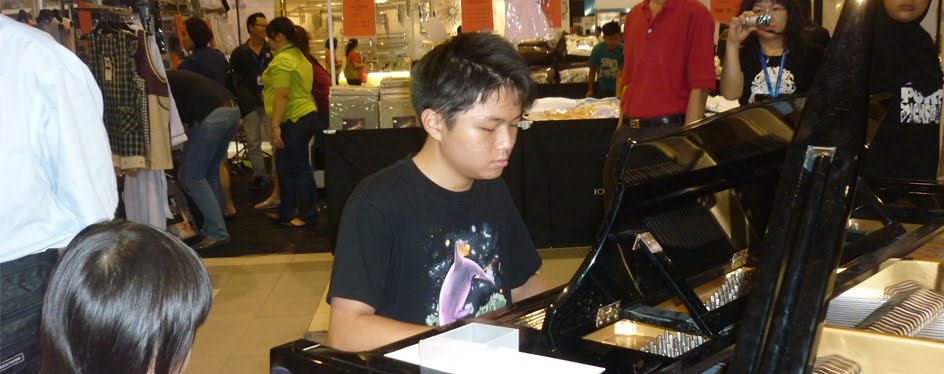
Piano is the most popular musical instrument as it helps the children in brain development. Research shows that children who learn music at their young age would definitely aid them in their future life.

  • Why is it needed
  • Where can I get some
  • What is Lorem Ipsum?
  • Mauris euismod rhoncus tortor
Showing posts with label Guitar. Show all posts

Wednesday, 30 November 2011

Rock ‘N’ Pop

0 comments
Book Title : Rock ‘N’ Pop – Guitar Chord Book
Publisher : Rhythm MP

This guitar chord book is a very useful and valuable reference chord book with several picture diagrams and interesting notation. It is very handy as well when quick reference is needed. Thus, all guitarists are highly encouraged to have one copy of this chord book.
Read More

Alfred’s Basic Guitar Books

0 comments
Book Title :
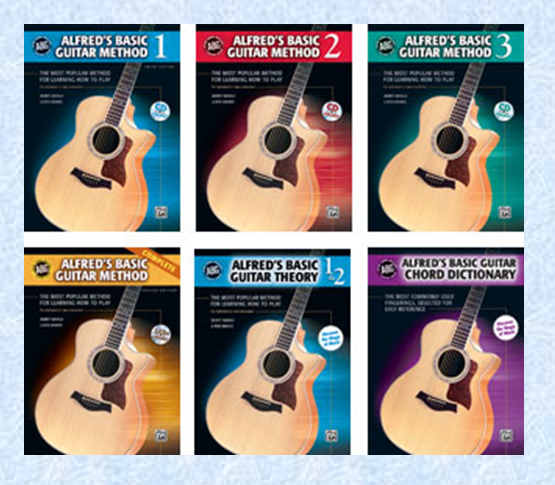
  • Alfred’s Basic Guitar Method (Book 1-3 & Complete)
  • Alfred’s Basic Guitar Theory
  • Alfred’s Basic Guitar Chord Dictionary
  • Author : Morty Manus and Ron Manus
    Publisher : Alfred Music Publishing

    “Alfred’s Basic Guitar Method” is a well-known series which helps beginners to have joy in playing guitar with the best-paced and most comprehensive guitar method available. This series is constantly updated and expanded with features of new layout that provides guidance in reading and learning the method. Blues, country, jazz, rock styles, folk and pop songs are included in each volume! Therefore, “Alfred’s Basic Guitar Method” is the first and best choice for today’s beginners!

    “Alfred’s Basic Guitar Theory” is an easy-to-use and simple workbook format book. Some topics covered include chords, scales, rhythm reading and progression. Students are highly encouraged to follow this book as it helps to enhance or improve his or her knowledge of theory towards guitar.

    With the selection of simple references, “Alfred’s Basic Guitar Chord Dictionary” provides the most commonly used chord fingerings. The easy-to-use guide enables the students to play their favourite songs with quick reference on the fingerings. This can be used as a guide to play like a professional guitarist.
    Read More

    Fun with Fingers

    0 comments
    Book Title : Fun with Fingers (book 1 & 2)
    Author : Clifford Cheam
    Publisher : Rhythm MP

    “Fun with Fingers” guides students in learning classical guitar by using classical, contemporary and pop songs with a fresh, new and creative approach. It is also used to train the guitar fingerings of students in order to improve their fingering skills on the guitar. The content of the book is fun and interesting enough for both teachers and students to have a great and enjoyable experience throughout the process of learning and practicing guitar.
    Read More

    Guitar Scales & Arpeggios

    0 comments
    Book Title : Guitar Scales & Arpeggios (Grades 1-5 and Grades 6-8)
    Publisher : ABRSM

    Scales is part of the ABRSM practical piano exams. Therefore, “ABRSM Piano Scales and Broken Chords” are designed for students who are sitting for ABRSM piano exams to practise their scales and broken chords skills. It consists of the following features:
  • All scales and arpeggios for the revised syllabus from 2009
  • Sggested fingering provided
  • User-friendly format and clear page layout
  • Helpful information regarding the advice for exam preparation
  • Read More

    ABRSM Guitar Exam Pieces

    0 comments
    Book Title : ABRSM Guitar Exam Pieces - from 2009 (Grade 1 to 8)
    Publisher : ABRSM Publishing

    “ABRSM Guitar Exam Pieces from 2009” is designed as a useful resource for students who are sitting for ABRSM guitar practical exams from year 2009. It consists of the following features:
  • Pieces of new ABRSM Guitar Syllabus from 2009
  • All duos are accompanied by another guitar and play along tracks for these pieces are included
  • Valuable and innovative resource for students to prepare for ABRSM exams
  • Read More

    Tuesday, 29 November 2011

    Guitar Tuner

    0 comments

    Guitar tuner is used to keep the strings in tune and it ensures that the musicians can play the right note. Music is all about intervals. If a guitarist is not playing the notes that it is supposed to be, then everything will be out of the original music. Guitar tuner shows six notes and you can tune the strings to those six notes. It is simple to be used and it is very useful for amateur guitarists to tune their guitars.
    Read More

    Thumbpick

    0 comments

    Unlike traditional guitar pick, thumbpick is wrapped around your thumb. It has different thickness according to the needs of the musicians. Thin picks will produce softer sound while thick picks will produce heavier sound. It is commonly accepted that thumbpick is easier to be used than a traditional guitar pick because it is more controllable. Thicker thumbpick is recommended for beginners because it produces lesser noise and it is harder to break
    Read More

    Guitar Capo

    0 comments

    A guitar capo is used so that it is easier for the guitarists to raise the pitch by just shortening the length of the strings. It is a clamp to the guitarists to clamp on different guitars’ frets. When capo is used, the guitarists need to ensure that all the strings are clamped. Besides that, it must also ensure that none of the strings is pulled aside as it will make the guitar’s produced sound out of tune. It is very useful especially when an inexperienced guitarist would like to play difficult chords.
    Read More

    Guitar String

    0 comments

    There are several types of guitar string available in the marketplace such as Elixir, Dean Markley and others. There is no significant difference for the quality of the strings, therefore it comes back to the preference of the guitarists. Guitar strings can be made of several materials such as nickel, stainless steel, phosphor bronze and nylon.
  • Nickel – It is normally used for electric guitar.
  • Stainless Steel – It is generally agreed that it will produce a sharper tone.
  • Phosphor Bronze – It is normally used for acoustic guitar and it produces a warmer tone.
  • Nylon – It is normally used for classical guitar.
  • Although thicker strings will produce nicer tone, it is harder to play. Thus, it is recommended for beginners to start with medium gauge strings. As you practise more, you can choose other strings according to your own preference.
    Read More

    Guitar Pick

    0 comments

    A guitar pick is a small flat tool used for strumming the guitar. It is normally made by 1 type of material, which is either plastic, wood, metal or others. Guitarists choose to use guitar pick because it produces lighter sound as compared to fingertips. It is widely accepted that a thinner pick will produce muddier and heavier sound whereas a heavy pick will produce controllable and delicate tone. For a beginner, it is recommended for them to use an equilateral pick since it is easier to be held.
    Read More

    Thursday, 24 November 2011

    Children and Adult Guitar

    0 comments
    Learning how to play musical instruments is a challenge, same goes to guitar. Guitar lesson is suitable for kids around 8 years old and above since their fingers will be strong enough to strum on the guitar that time. Moreover, choosing the right size of guitar at different age stages is vital. For a child, a guitar of normal size might be too large for them as they cannot reach out to the specific chords. Not to worry-Robinson Music Centre is the solution in this matter! They will certainly give you advice and find the suitable size of the guitar for your child.

    There are many types of guitars which consist of electric, acoustic, classical, and base. The technical approaches such as playing the notes, chords, and scales are slightly different, depending on the type of guitar you use. This simply means that if you are good in playing acoustic guitar, it doesn’t mean that you can play well in base guitar since the style of playing each guitar is very different.

    When it comes to examination, guitar examination is ranged from Grade 1 to Grade 8. Each student will receive the ABRSM certificate after he or she passes the examination. In terms of assessment, the examiner will assess the accuracy of notes and rhythm, the quality and projection of tone, tuning, posture, hand positions and articulation. Any systematic fingering that produces a good result can be accepted. Sight reading and aural test will be parts of the exam as well.
    Read More

    Sunday, 13 November 2011

    Gibson

    0 comments
    Gibson, a company that endured strongly and survived the downturn of guitar industry in the late ‘70s, is another name that is widely known in this industry. In year 1984, the Gibson international headquarters officially migrated to Nashville where this happened right after the shutting down of Kalamazoo plant. The downfall of the company had been quickly picked up by both Henry Juszkiewicz and David Berryman in 1986, who rebuilt Gibson’s brand name for quality and simultaneously increased its profitability.

    Gibson is widely known for its production of electric guitars, especially Les Paul guitars back to 1974 in Nashville. Other than Les Paul, the classic designs that represent the company also include ES-175, ES-335, Flying V, Explorer, Firebird and SGs. In order to fit into the demand for vintage stylings, the company reissued the dot-neck version of the ES-335 in 1981 and the flametop sunburst Les Paul in 1982. Besides, B.B. King and Chet Atkins joined Gibson in year 1980 and 1982 respectively. The former created Lucille model, while the latter came with his solidbody acoustic guitar. Today, Firebird X guitar generates new heights of functionality and usability for professional guitarist and enthusiasts by using newest and recently found technologies.

    Electric guitars
    Acoustic guitars
    Read More

    Saturday, 12 November 2011

    Epiphone

    0 comments
    The honour as the American’s oldest and most notable instrument maker, can go to none other than Epiphone, which was established since 1873. All the way to the 90s, the company had put forward a variety of 43 models to the music industry. It is further expanded after an office in Seoul was set up, re-introducing itself to the world as an innovative guitar maker. The development of pickups, bridges, toggle switches, and fret inlays, as well as unique features like the metal E logo and frequensator tailpiece, all of which involve the hands-on-role of their own engineers. This ensures that guitars of fine quality can be consistently produced.

    In year 1993, a new range acoustic and electric instrument was introduced and it had successfully invited good feedback from customers. In the same year, Rivieras and Sheratons, Excellente, Texan and Frontier flat tops were produced. The next year, Casino, Riviera, Sorrento, and Rivoli bass were re-launched. Following that in 2000, Epiphone introduced the Elitist range and strengthened its position in the acoustic market. In addition, the first factory was set up in China during the year of 2004.

    The company produces guitars for every genre and it is a company that undoubtedly commits in delivering first-rated instruments. In the words of Epiphone’s President Jim Rosenberg: "Epiphone is still the House of Stathopoulo. We're designers. We're players. We're mavericks. And, we're passionate about everything we do."

    Types of Guitars: Acoustic, Acoustic Electric, Archtop, Bass, Bluegrass, Designer, Les Paul, Masterbilt, Nylon, SG and Packs.
    Read More

    Friday, 11 November 2011

    L. Luthier

    0 comments
    Mr. Adwin Lai, an experienced guitarist and guitar teacher, found the L.Luthier guitar in year 2009, with a vision to provide local guitar lovers with high quality guitars that make every penny paid counts. Luthier was defined as the master maker of fine strings instruments such as violin, guitar and so forth. By the naming of brand, L. Luthier pledged to never deviate from the quality that they have promised for the sake of better margin.

    The company’s unique selling point of quality assurance can be seen through their standard operation procedure (SOP) of quality control method in monitoring and checking every single guitar from RM300 to RM4000. This is to ensure that the guitar delivered to customers is in perfect condition. In order to stick to their vision, the company is clear that they would commit to heighten customer satisfaction and services rather than simply focusing on the marketing activities. Alongside with that value, word of mouth is believed to be their best marketing strategy.

    Since its establishment, L.Luthier has expanded at a rapid pace and becomes a main competitor in the market of this musical instrument, standing side by side with the other guitar brands. They supply acoustic guitars as well as classical guitars which are both manufactured in China. On top of that, they also provide full range of accessories like strings, classical and pop guitar scores, capo, drum sticks, tuner and so forth.

    For more information about acoustic guitar and classical guitar, please click here.
    Read More

    Thursday, 10 November 2011

    Fender

    0 comments
    Since Fender Musical Instruments Corporation was established back in 1946, it has been playing a crucial role in evolving music of almost every genre including jazz, country and western, rock ‘n’ roll and so forth. They are the pioneer in manufacturing guitars, basses, amplifiers and related equipments. Besides, instruments such as Telecaster® and Stratocaster® guitars, as well as Precision® and Jazz® bass guitars are well-known internationally as design classics.

    Telecaster® guitar was invented by Leo Fender from southern California in year 1951 and it was the first solid-body Spanish-style electric guitar produced in large scale for commercial purposes. In the same year, Precision Bass guitar was introduced. It has a sequence of bars or ridges on the fingerboard which is used for fixing the positions of the fingers to produce the desired notes, also known as frets. It was played like a guitar. In addition, it is able to amplify and release bassists from increasingly difficult-to-hear acoustic basses. These two inventions have become the foundation for modern rock combo.

    On the other hand, Stratocaster was brought into the market in 1954 based on the feedbacks from professional musicians, Fender’s employee and the founder himself. The advantages included are more tonal possibilities due to the third single-coil pickup and easier access to upper registers because of its double cutaway. Not forgetting the new Fender vibrato (or “tremolo”) bridge also. In addition, Leo Fender also comes up with classic instruments and amplifier designs such as the Jazz Bass® guitar, the Jaguar® and Jazzmaster® guitars and the Twin Reverb® amplifier.

    The company was eventually bought over by CBS in year 1965. William Schultz and his associate William Mendello then further expanded the company with dramatic quality improvement and commitment to research and development. In 1985, Fender’s flagship U.S. factory in Corona, California was established and the next manufacturing plant was set up in Ensenada, Mexico two years later. Besides, in order to accommodate professional musicians’ requests in customising their guitars, Fender Custom Shop was opened. Schultz retired in 2005 and the CEO position was taken by Mendello.

    Electric Guitars
    Bass Guitars
    Acoustic Guitars

    Read More

    Wednesday, 9 November 2011

    Yamaha

    0 comments
    Torakusu Yamaha, who was born in the family of Tokugawa in Kishu region and being the third son of astronomer Kounosuke Yamaha, successfully repaired the very first reed organ in Hamamatsu's Jinjo elementary school in year 1887. Since then, he began to take orders for more thereafter. Two years later, he established Yamaha Organ Works and subsequently found Nippon Gakki Company Limited in October 12, 1897. The company then expanded rapidly worldwide and primed the global musical instruments production with 94 subsidiaries and representative offices internationally. On top of that, it has become the significant producer in many other fields such as semiconductors and other related products, sporting goods, machine tools and home appliances, just to name a few. During the 100th anniversary of the company, the name ‘Nippon Gakki Company Limited’ is officially replaced by 'Yamaha Corporation'.

    Throughout the growth of Yamaha, it emphasizes on sparking off variety of music activities publicly, including Yamaha music schools, and the Junior Original Concert via Yamaha Music Foundation which was launched in 1966. All these contributions towards stimulating music education and popularization are the explicit and implicit factors that have made Yamaha stand out among its competitors. Besides, the company is committed in generating products and services which carry superior quality that meets the needs and desires of all societies globally. As a result, the brand name ‘Yamaha’ is let alone positively rated by consumers, learners and professionals.

    Yamaha’s corporate objective is, “Creating ‘Kando’ Together”, whereby they will continuously create ‘kando’ and enrich the culture with technology and passion born of sound music, together with people all over the world. Their philosophies are embedded in its customer-oriented and quality-conscious management that fully satisfy customers by giving quality products and services and transparent sound management towards maximizing shareholder’s profit. Besides valuing people so as to allow them to demonstrate their full potential through their work, Yamaha also creates the harmony with society as in being a good corporate citizen that contributes to the development of society, culture and the economy.
    References link:http://my.yamaha.com/en/products/musical-instruments/guitars-basses/
    Read More
    Powered by Blogger.

    Labels

    ABRSM (8) Accessories (17) Adult (3) Alfred (7) Antonin Dvorak (1) Art (5) Aural Test (1) Book (25) Children (7) Craft (4) Drum (2) English (1) Epiphone (1) Eurostring (1) Exam (8) Faber (2) Fender (1) Franz Sandner (1) Gibson (1) Guitar (16) Kawai (1) Keyboard (1) L. Luthier (1) Lesson (11) Lothar Semmlinger (1) Musical Instrument (15) Organ (1) Piano (21) Piano Brand (6) Pramberger (1) Rhythm (7) Theory (6) Violin (8) Violin Brand (4) Weber (1) Wilhelm Tell (1) Yamaha (2) Young Chang (1)